
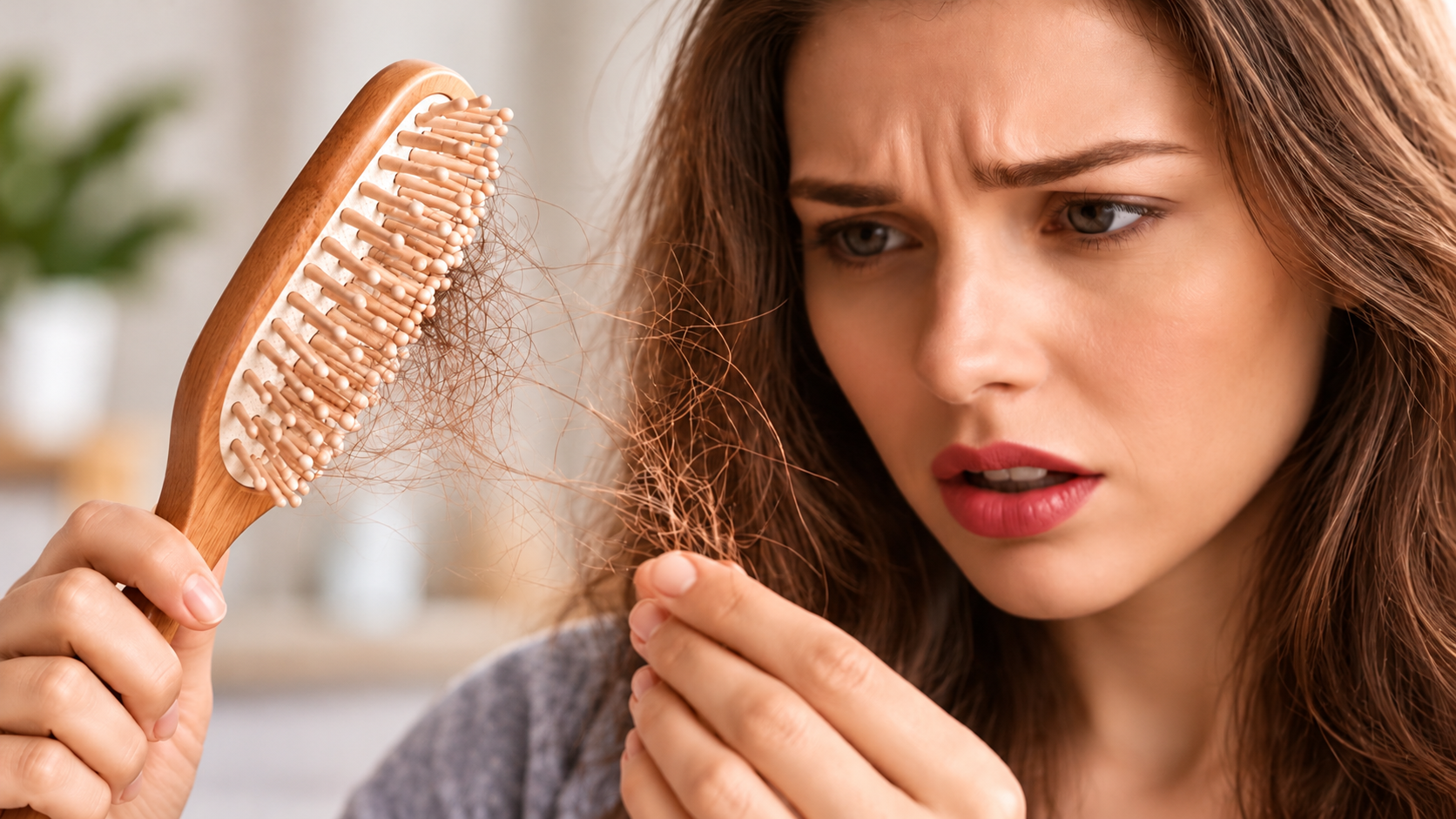
Noticing more hair in your brush, a wider parting or a thinning hairline can be unsettling. Hair loss in women has several possible causes, and the pattern, timing and condition of your scalp can offer useful clues. These signs are not a diagnosis, but knowing what to look for can help you decide when to seek professional advice.
1. Your parting is gradually getting wider
A widening central parting or reduced density over the crown may be associated with female pattern hair loss (androgenetic alopecia). It usually develops gradually. A GP or dermatologist can assess the pattern and consider other causes, including nutritional deficiencies or thyroid problems.
2. You are shedding more hair than usual
Noticeable shedding when washing or brushing can happen after illness, major stress, childbirth, rapid weight change or changes in medication. One possible explanation is telogen effluvium, where more hairs than usual enter the shedding phase. It often begins a few months after a trigger. If shedding is heavy, persistent or unexplained, ask your GP for an assessment.
3. Smooth, round patches appear
One or more sharply defined bald patches can be a sign of alopecia areata, an autoimmune condition. It can affect scalp hair and sometimes eyebrows or other body hair. New or rapidly developing patches should be assessed by a healthcare professional.
4. Your hairline or temples are thinning
Hair loss around the edges can sometimes be caused by repeated tension from tight hairstyles, extensions or hairpieces; this is called traction alopecia. Early changes may improve when tension is removed, but prolonged pulling can cause lasting damage. A receding hairline can also have other causes, so avoid assuming it is purely styling-related.
5. Your scalp is sore, inflamed or unusually shiny
Redness, burning, itching, scaling, tenderness or areas that look smooth and shiny may need prompt assessment, particularly if hair follicles appear to be disappearing. Some scarring alopecias can cause permanent hair loss without timely medical treatment. Seek GP or dermatology advice rather than trying to conceal an active scalp problem with extensions.
6. Your hair seems thinner after pregnancy
Postpartum shedding is common after the hormonal changes of childbirth. It is often temporary, but not all hair loss after pregnancy is automatically postpartum shedding. If you develop patches, scalp symptoms, marked tiredness or prolonged shedding, speak with your GP.
7. You notice changes during perimenopause or menopause
Hormonal changes around menopause may coincide with reduced density, a wider parting or finer-feeling hair. Female pattern hair loss and other conditions can also occur at this stage. A clinical assessment can help distinguish between possible explanations rather than attributing everything to hormones.
When should you seek medical advice?
Contact your GP if hair loss is sudden, patchy, rapidly worsening, associated with scalp pain or inflammation, or causing concern. A dermatologist can help identify the cause. Hair loss may have more than one contributing factor, and treatment depends on the diagnosis.
How Salonlareine can help
At Salonlareine, a private one-to-one hair studio in Kingswood, Bristol, we understand how personal thinning hair and hair loss can feel. We offer scalp and hair consultations and can discuss cosmetic options such as discreet toppers, meshless integration and non-surgical hair replacement where appropriate. Our consultation does not replace medical diagnosis or treatment.
We welcome clients from Bristol, Bath and surrounding areas. You can learn more about hair thinning in women over 40, explore our hair loss and replacement services, or book a consultation.
Further reading: NHS guidance on hair loss. This article provides general information and is not medical advice.
